Homework Help Made Easy: Routines That Build Independence

Homework Help Made Easy: A Parent Toolkit to Build Study Habits and Independent Learning
Homework time can feel like a daily negotiation—especially when kids are tired, distracted, or unsure where to start. A simple, repeatable system helps more than longer study sessions: clear routines, a calm workspace, and small steps that teach kids how to manage tasks on their own. The goal is steady progress, fewer power struggles, and skills that transfer beyond one assignment.
What makes homework hard (and what actually helps)
Most homework battles aren’t about motivation; they’re about friction. Common pain points include unclear directions, assignments that feel too big to tackle, a shaky sense of time, and emotional fatigue after a full school day. When kids hit that wall, they often default to avoidance—arguing, stalling, or rushing.
A practical shift is to focus on process rather than perfection. A consistent sequence—plan, start, check, submit—builds confidence because the child knows what to do next, even when the work is challenging. Keep support predictable: same start time, same first step, same wrap-up routine.
To make starting easier, rely on short “activation” steps that lower the mental barrier: open the backpack, list assignments, choose the first five-minute task. These tiny actions create momentum, and momentum is often what kids are missing.
Set up a homework routine that runs on autopilot
Choose a consistent homework window anchored to something that already happens daily—snack time, changing clothes, or a 10-minute decompression break. Anchoring reduces decision fatigue because the schedule stops feeling negotiable.
Begin with a quick reset: water, bathroom, device settings, and all materials on the table. Then use a simple timing structure: 15–25 minutes of focused work followed by a 3–5 minute break, repeated as needed. Short work sprints help kids stay engaged without feeling trapped.
Finish with a closing ritual: check completed items, pack the bag, and submit online work (if applicable). Closing routines prevent the “I did it but forgot to turn it in” problem and strengthen follow-through.
| Time block | What to do | Parent role | What the child learns |
|---|---|---|---|
| 10–20 min | Decompress (snack, movement, brief chat) | Keep it short and predictable | Transition skills and emotional reset |
| 3–5 min | Plan: write assignments and pick the first task | Ask guiding questions, avoid taking over | Prioritizing and task initiation |
| 15–25 min | Focused work sprint | Stay nearby if needed; minimal interruptions | Sustained attention and stamina |
| 3–5 min | Break: water/stretch | Enforce break boundaries (no endless scrolling) | Self-regulation |
| 5–10 min | Check + pack + submit if online | Spot-check for completeness | Accountability and follow-through |
Create a workspace that reduces distractions
A good workspace doesn’t need to be fancy—it needs to be consistent. Use one default homework spot with good lighting, a flat surface, and basic supplies within reach (pencils, paper, calculator, charger, headphones if needed). When kids always work in the same place, less energy goes to “getting ready” and more goes to starting.
Keep visual clutter low: only the current materials on the desk, everything else in a bin or drawer. Visual noise quietly competes for attention, especially for kids who already struggle to focus.
Device rules should be decided ahead of time. Options include airplane mode, app limits, or keeping phones in a separate room during work sprints. The key is to make the rule automatic so it doesn’t become another debate.
Finally, add a visible cue for progress: a checklist, a simple timer, or a “done” tray for finished work. Kids who can see progress are more likely to keep going.
Homework strategies that build independence (without nagging)
Independence grows when support looks more like coaching than reminding. Swap repeated reminders for prompts that guide thinking: “What’s your plan?” “What’s step one?” “How will you check it?” These questions build the internal script kids need when no adult is nearby.
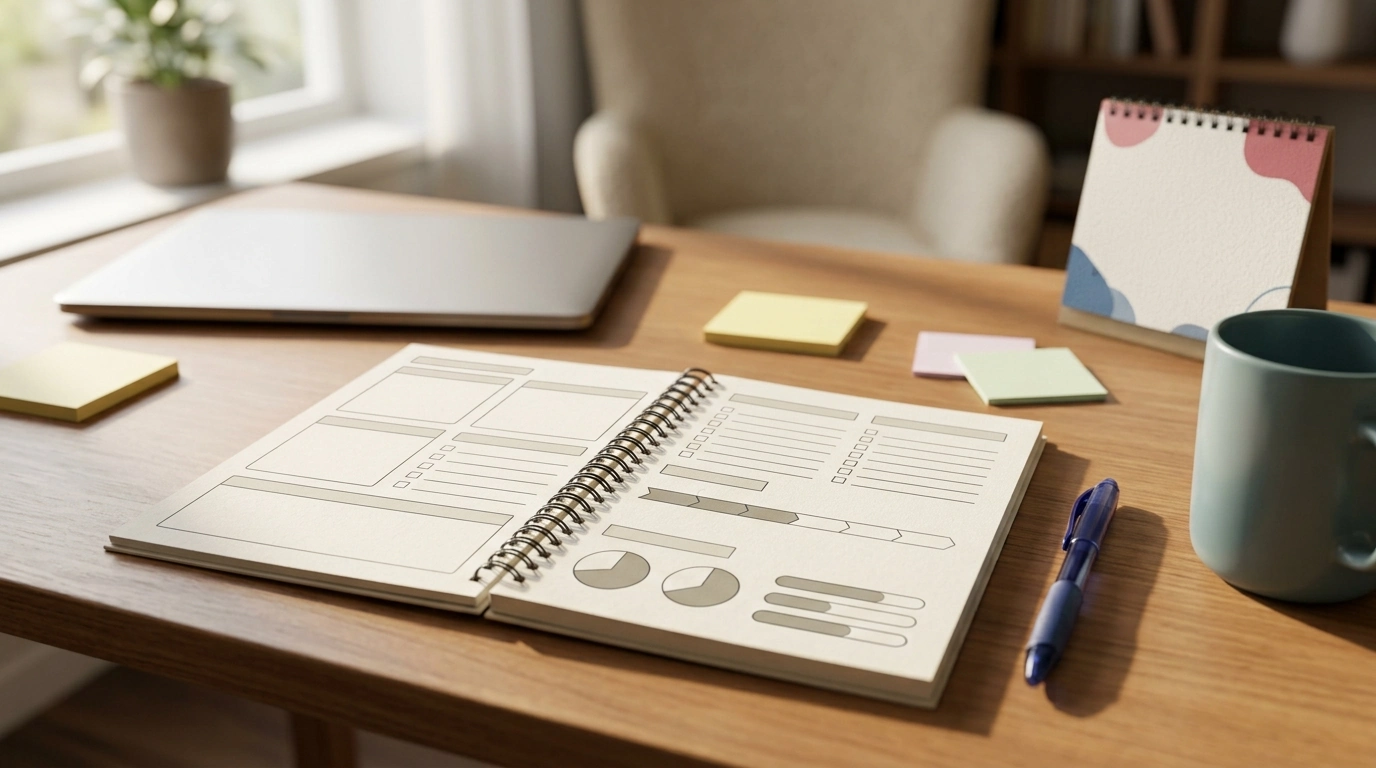
If you want a ready-to-use set of checklists and planning pages to reinforce these habits, the Homework Help Made Easy Toolkit for Parents – Printable Guide for Creating Study Habits, Homework Strategies & Independent Learning can make the routine easier to repeat day after day.
When frustration spikes: calm, reset, and return to the task
For families who want simple stress reset tools that pair well with homework breaks, Break the Tension: Stress Relief Techniques – Breathing Exercises, Quick Meditations, Grounding Techniques, and Time Management Tips to Reduce Stress offers quick options that fit into a 3–5 minute pause.
For additional guidance, the American Academy of Pediatrics shares family-friendly tips on study habits, and the American Psychological Association provides practical insights on helping kids manage stress.
Using a printable toolkit to make the system stick
FAQ
How long should homework take each night?
A common guideline is about 10 minutes per grade level (for example, 30–40 minutes around 3rd–4th grade and closer to 60–90 minutes in middle school), but quality matters more than total time. Use timed work sprints and check your school’s expectations; if it routinely runs far beyond what’s typical, contact the teacher to troubleshoot.
What if a child refuses to start homework?
Start with a short decompression window, then use a clear start cue and a first five-minute task to create momentum. Offer limited choices (“math first or reading first?”) and keep consequences consistent while using calm prompts like, “What’s step one?” to avoid a power struggle.
How can parents help without doing the work?
Act like a coach: ask guiding questions, use a help ladder (reread directions, find an example, try one, ask a specific question), and check for completeness instead of giving answers. As skills improve, fade help from “sit nearby” to “check in at the start and end.”









Leave a comment