New Kitten Feeding Guide: Portions, Schedules, Best Food
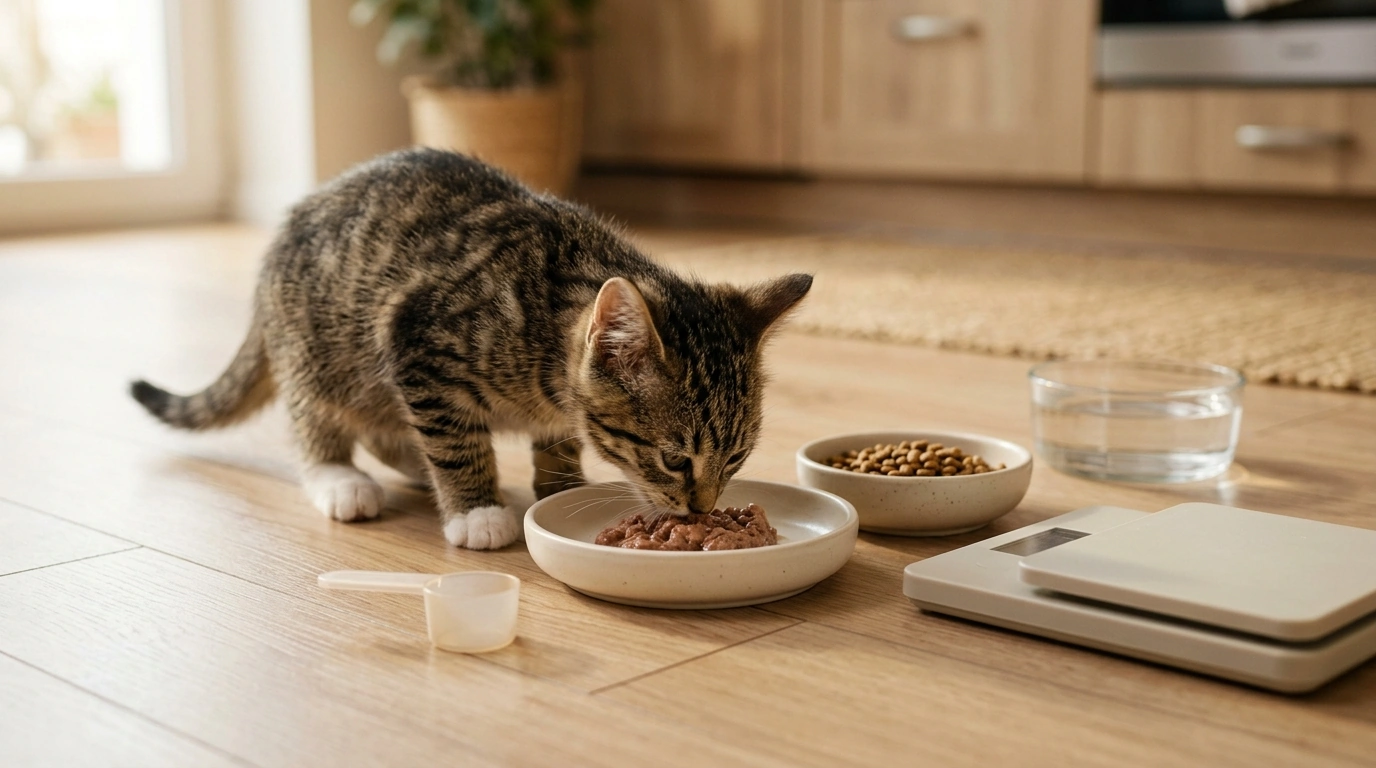
Feeding Your New Kitten Right: Healthy Growth and Happy Mealtimes
A new kitten’s first months are a fast-growth stage where the right food, portions, and feeding routine support brain development, strong bones, a healthy immune system, and good litter box habits. The goal is simple: choose a complete diet for growth, feed it consistently, and adjust portions based on real-life results—weekly weigh-ins, appetite, and stool quality.
For deeper background on cat feeding principles and how to evaluate diets, these references are worth bookmarking: Cornell Feline Health Center, the WSAVA Global Nutrition Toolkit, and AAFCO consumer labeling info.
What makes kitten nutrition different from adult cat nutrition
Kittens aren’t “small cats.” They need more energy and a tighter nutrient balance because they’re building muscle, bone, and nervous system tissue at the same time they’re burning calories through play.
- Higher calories per pound: Growth and zoomies require more energy than an adult maintenance diet provides.
- More protein and key amino acids: Look for diets that are complete and balanced for growth, with reliable animal protein and taurine.
- Higher fat and DHA/omega-3s: Fat supports energy needs; DHA supports brain and vision development.
- Calcium/phosphorus balance matters: The right ratio supports teeth and bones; excesses (or imbalances) can cause problems.
- Smaller stomachs: Many kittens tolerate smaller, more frequent meals better than one or two large feedings.
What food to start a new kitten on
The smoothest start is usually the most boring one: keep the same diet your kitten was already eating for a few days. Sudden changes are a common cause of soft stool, gas, or refusal to eat.
- Keep the current diet for 3–7 days whenever possible (breeder/shelter/foster food), then decide if you want to switch.
- Choose “complete and balanced” for “growth” or “all life stages,” formulated to meet AAFCO (or an equivalent) nutrient profile.
- Wet supports hydration and can be easier to chew; dry is convenient and works well for measured meals—many households do a mix.
- Avoid cow’s milk (many kittens are lactose-intolerant). Only use milk replacers for orphaned kittens with veterinary guidance.
- Under 8 weeks or early-weaned: get a veterinarian’s feeding plan before making changes.
Quick starting choices for common situations
| Situation | Best first step | What to avoid |
|---|---|---|
| Recently adopted, diet known | Keep the current kitten food for 3–7 days, then transition if needed | Sudden brand/protein switches |
| Recently adopted, diet unknown | Use a reputable kitten formula (wet or wet+dry) and monitor stool | Rich treats, new toppers, frequent changes |
| Sensitive stomach signs (soft stool, gas) | Simplify: one kitten formula, measured portions, slower transition | Multiple proteins/flavors in the same week |
| Very young or small for age | Vet check for weight gain plan; consider more frequent meals | Free-feeding without monitoring intake |
Feeding frequency and portions by age
Use the feeding guide on the label as a starting point, then adjust to keep a steady growth curve (not rapid weight spikes). A kitchen scale and a weekly weigh-in are often the fastest way to remove guesswork.
- If your kitten regularly leaves food, reduce portions slightly.
- If the bowl is licked clean and your kitten seems persistently hungry, increase gradually.
- Call a veterinarian if there’s poor appetite lasting more than a day, repeated vomiting, or diarrhea.
Typical feeding schedule (adjust based on your kitten and label directions)
| Kitten age | Meals per day | Texture tips | Notes to monitor |
|---|---|---|---|
| 8–12 weeks | 4 | Mostly wet or softened kibble; small portions | Weight gain, stool firmness, hydration |
| 3–6 months | 3 | Wet + dry mix often works well | Energy levels, steady growth, coat shine |
| 6–12 months | 2–3 | Gradually shift to fewer meals if desired | Body condition score, appetite consistency |
| 12 months+ | 2 | Transition to adult food if appropriate | Maintain lean body condition |
Reading labels: what matters and what’s mostly marketing
Wet vs. dry vs. mixed feeding
How to transition to a new food without tummy trouble
Making mealtimes easy: routine, bowls, and feeding location
A simple plan for the first two weeks at home
Nutrition support you can keep on hand
If you want a structured roadmap for the first month—meal frequency by age, portion adjustments, and a calm transition plan—see Feeding Your New Kitten Right: Essential Kitten Nutrition eBook.
For families who like printable checklists and routines that make daily tracking easier, Homework Help Made Easy Toolkit for Parents – Printable Guide can double as a simple habit-and-log framework for weekly weigh-ins and feeding notes.
If you’re building a grab-and-go kit for vet visits (records, treats, travel wipes, and a small scale), a dedicated carryall like the Vintage Design Fashion Shoulder Messenger Bag can help keep essentials in one place.
FAQ
How much should a kitten eat per day?
Start with the food label’s feeding guide, then adjust based on your kitten’s age, current weight, weekly weight gain, and body condition. Because wet and dry foods have different calorie densities, measured portions plus weekly weigh-ins are the simplest way to dial in the right amount.
Is wet food or dry food better for kittens?
Either can work if it’s complete and balanced for growth. Wet food supports hydration and is often easier to eat, while dry food is convenient and calorie-dense; many kittens do well with a mixed plan as long as total daily calories stay consistent.
When can a kitten switch to adult cat food?
Most kittens transition around 12 months, while some larger breeds may benefit from kitten nutrition longer. Make the change gradually over 7–10 days, and confirm timing with a veterinarian if your cat is underweight, overweight, or managing a health condition.












Leave a comment